
Turning Book Week 2026 “Symphony of Stories” Into a Musical Experience in Your Classroom
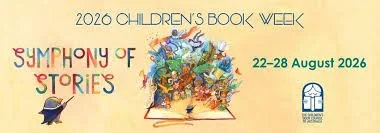
CBCA Book Week 2026 Symphony of Stories is always full of colour, costumes, and creativity — but this year invites you to take things a step further.
Instead of just reading stories… what if your classroom performed them?
By leaning into the musical side of the theme, you can create an experience that feels lively, immersive, and completely unforgettable — especially for students who connect through sound, rhythm, and movement.
Start With the Beat of a Story
Every story has a rhythm.
Some are slow and gentle. Others are fast, chaotic, and full of energy.
Explore this with your class by:
Clapping out the rhythm of a story as you read
Speeding up or slowing down at key moments
Using simple percussion (tables, pencils, body taps) to match the pacing
It’s a simple shift, but it transforms passive listening into an active experience.
Turn a Picture Book Into a Song
Choose a familiar picture book and reimagine it musically.
You can:
Turn repeated lines into a chorus
Create simple melodies for key moments
Assign verses to different students or groups
It doesn’t need to be polished — the goal is participation and fun.
Students will start to hear the structure of stories in a completely new way.
Build Character Themes
Just like in movies, characters can have their own “theme music”.
Ask students:
What does this character sound like?
Are they a loud drum, a soft piano, a quirky trumpet?
Students can:
Create short sound patterns for each character
Perform them when that character appears
Layer sounds when characters interact
This builds both comprehension and creativity.
Create a Classroom Soundtrack
As a class, build a full “soundtrack” for a story.
Break it into parts:
Opening theme
Rising action
Big moment (the “drum hit”)
Ending
Assign groups to each section and bring it all together into a full performance.
This works especially well with graphic novels or highly visual stories.
Explore Sound Effects as Storytelling
Sound effects are often the gateway for reluctant readers.
Think:
BOOM
CRASH
WHOOSH
TAP TAP TAP
Have students:
Invent their own sound effects
Perform them using voices or objects
Add them into storytelling or comic panels
It helps bridge the gap between reading and play.
Bring in Movement and Music Together
Music naturally leads to movement.
Try:
Walking or marching to the rhythm of a story
Acting out scenes with musical backing
Creating a “story dance” that follows the narrative
This is especially powerful for younger students or those who struggle to sit and engage for long periods.
Make It Messy, Make It Fun
The best part about this approach?
It doesn’t need to be perfect.
In fact, the more experimental and playful it is, the more students will engage.
You’re not creating a polished performance — you’re creating an experience where:
Stories are heard
Stories are felt
Stories are lived
CBCA Book Week 2026 Symphony of Stories is an invitation to think differently about books.
When you bring music into storytelling, something shifts. Stories become more dynamic, more memorable, and more accessible to a wider range of learners.
And for some students, this might be the moment where stories finally click — not just as words on a page, but as something alive.
That’s the real magic of Book Week!
Hey, there! I’m Jasmine Berry, a freelance illustrator based in sunny Perth, Western Australia. Most days you’ll find me sketching away on my iPad or surrounded by pencils and cats, chasing new ideas. I like to think of myself as eternally optimistic—always seeing the fun, the colour, and the possibility in every project I take on. Send me a message if you would like to collaborate on a project.