
Why Should YOU Be Using Local Authors and Illustrators in Your Classroom?
When it comes to choosing books for the classroom, it’s easy to reach for the well-known titles — the classics, the big names, the ones everyone recognises.
But there’s something incredibly powerful about bringing local authors and illustrators into your classroom library.
Not only does it support Australian creatives, it creates a deeper, more meaningful connection for your students — one that can genuinely transform how they see books, stories, and even their own potential.
Stories That Feel Close to Home
Local books often reflect familiar places, language, and experiences.
For students, this means:
Recognising settings that feel real and relatable
Hearing language and expressions they use every day
Seeing their own lives reflected in stories
That sense of familiarity can be the difference between a student feeling disconnected and completely drawn in.
Real People, Real Possibilities
When students read books by local creators, something shifts.
Authors and illustrators stop being “famous people somewhere else” — and start becoming real people who live nearby.
It opens up a powerful thought:
“Someone from my community made this… maybe I can too.”
This is especially impactful for creative students who may not have considered storytelling or illustration as something within reach.
Boosting Engagement (Especially for Reluctant Readers)
There’s a natural curiosity that comes with local work.
Students are more likely to engage when:
They know the creator is from their area
There’s an opportunity to meet them
The story feels relevant to their world
Pair this with visually engaging formats like picture books or graphic novels, and suddenly reading feels far more accessible and enjoyable.
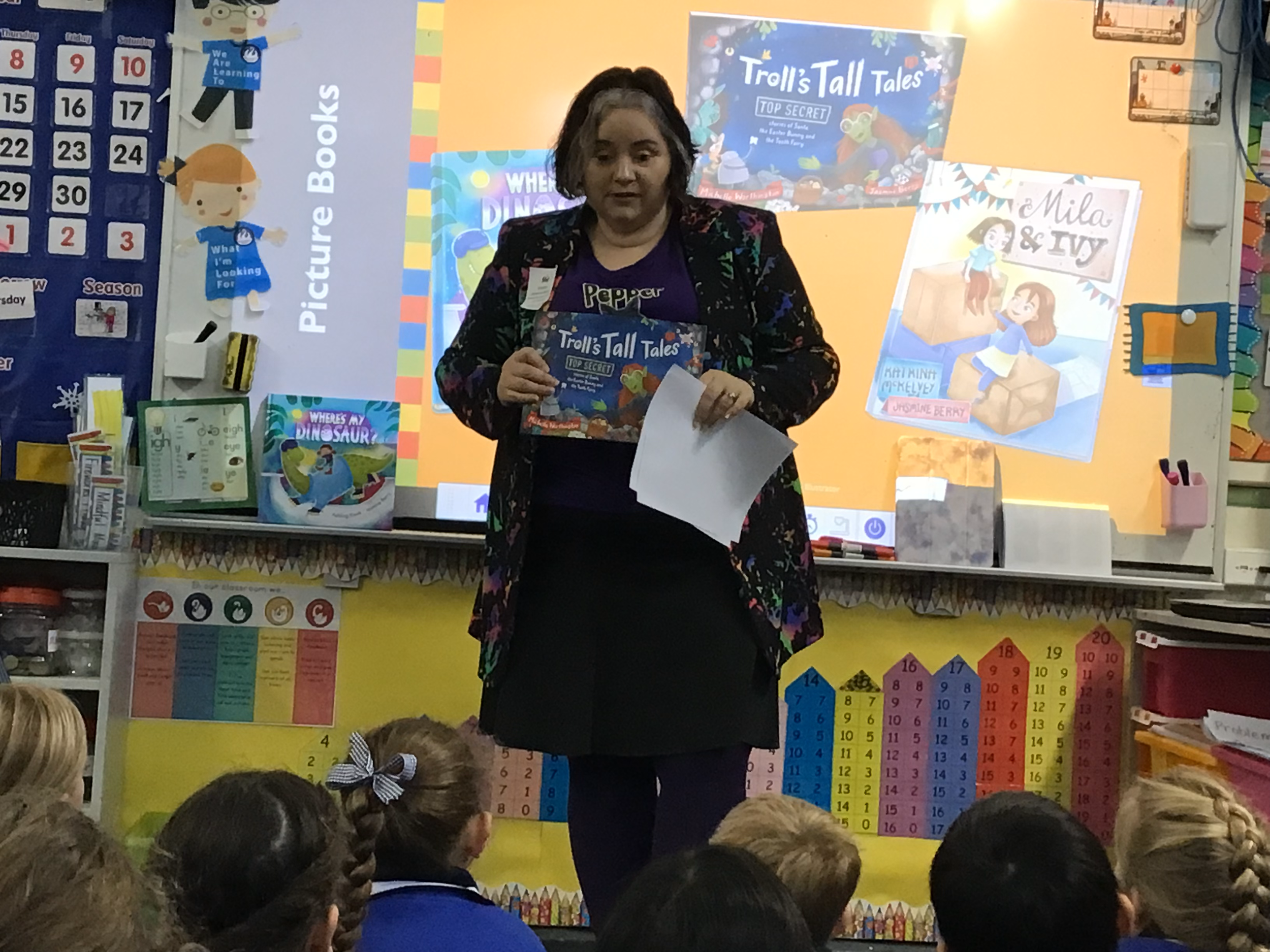
Bringing Books to Life Through Author and Illustrator Visits
One of the biggest advantages of using local creators is the opportunity to extend learning beyond the page.
Inviting an author or illustrator into your classroom or library can:
Bring stories to life through live drawing or storytelling
Show students the process behind creating a book
Encourage questions, curiosity, and creativity
Inspire even the most hesitant readers and writers
These sessions don’t just support literacy — they build confidence, creativity, and connection.
Simple Ways to Get Started
You don’t need to overhaul your entire program to make an impact.
Start small:
Add a few local titles to your classroom library
Feature a “Local Author of the Month”
Use picture books as writing or drawing prompts
Connect stories to art, storytelling, or creative projects
Even one book can spark something meaningful.
A Personal Note
As a local children’s book illustrator and author myself, I’ve seen firsthand how powerful these connections can be!
Whether it’s through a picture book or my upcoming graphic novel, my goal is always the same — to create stories that feel engaging, accessible, and inspiring for young readers.
And when those stories are shared in classrooms, something really special happens.
Hey, there! I’m Jasmine Berry, a freelance illustrator based in sunny Perth, Western Australia. Most days you’ll find me sketching away on my iPad or surrounded by pencils and cats, chasing new ideas. I like to think of myself as eternally optimistic—always seeing the fun, the colour, and the possibility in every project I take on. Send me a message if you would like to collaborate on a project.